

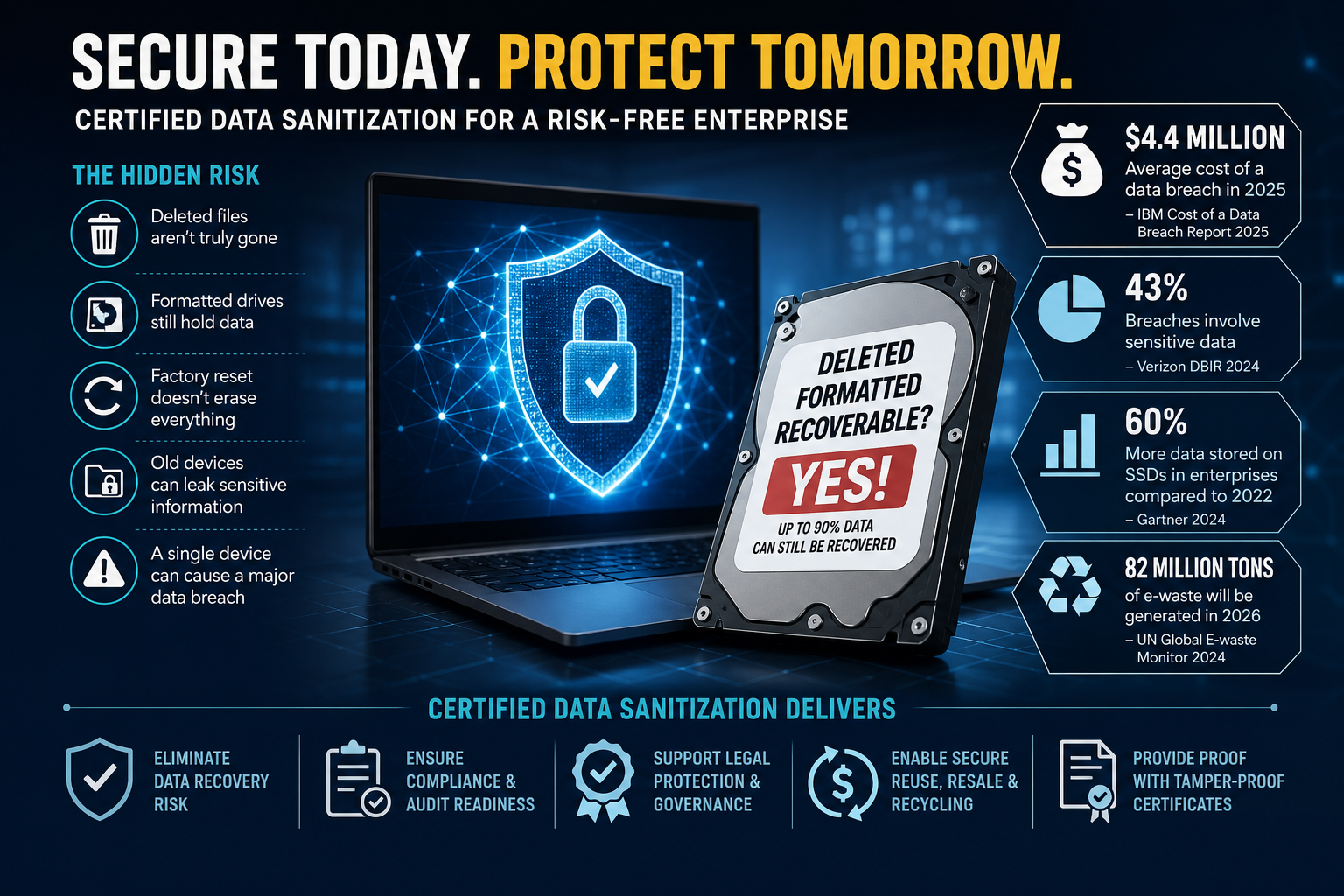
From Risk Insight to Security Action: Why Enterprises Must Adopt Certified Data Sanitization
Aug 11, 2026
DiskDeleter
Every Retired Device Could Be Your Next Security Incident
Cybersecurity budgets continue to grow, yet one of the biggest enterprise security risks often leaves the building unnoticed—retired storage devices.
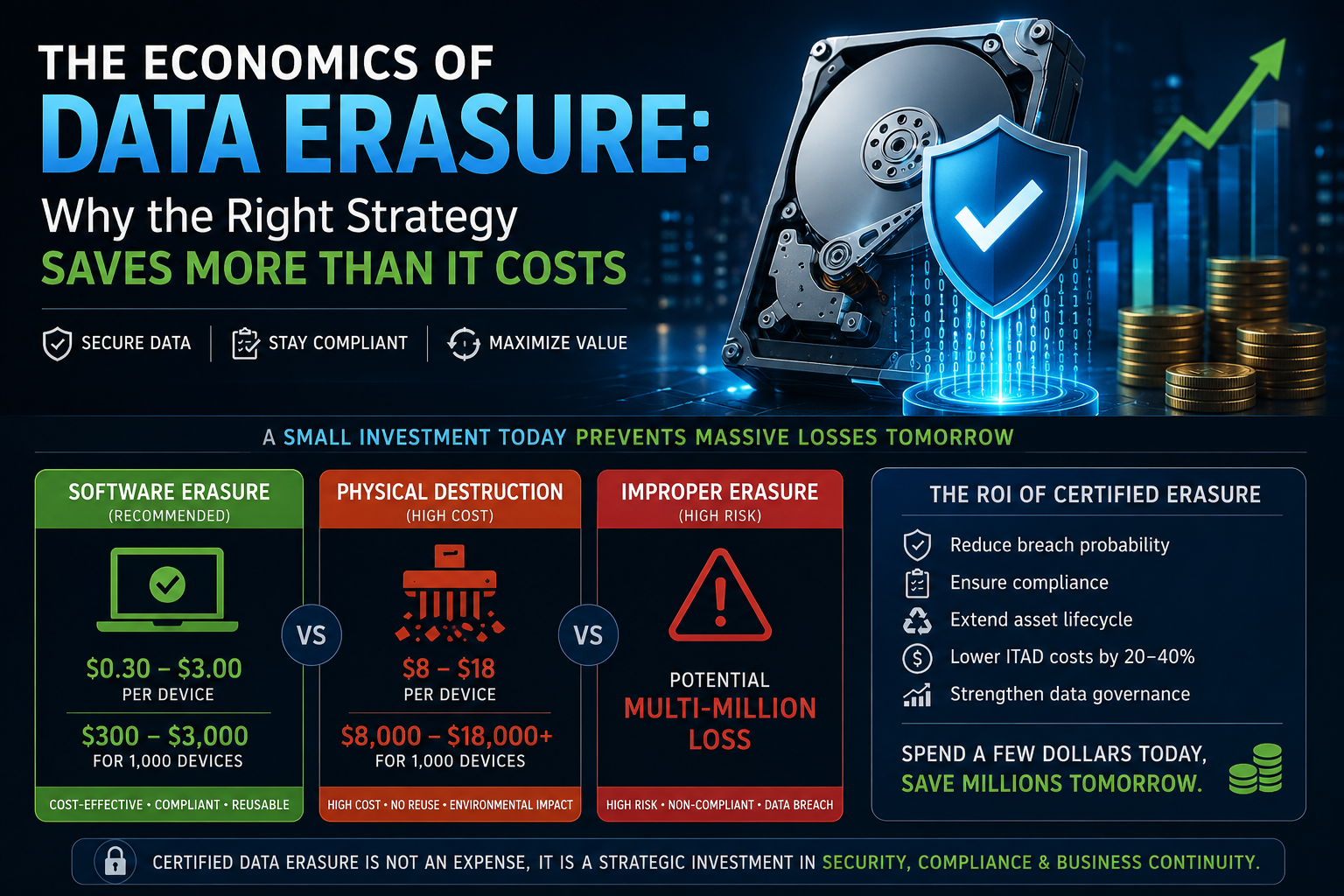
The Economics of Data Erasure: Why the Right Strategy Saves More Than It Costs
Jul 14, 2026
DiskDeleter
In Part 1, we explored how improper data erasure can expose organizations to significant financial risks.
Now the next logical question is:
What does it cost to implement secure data erasure?
And which method actually delivers the best return on investment?
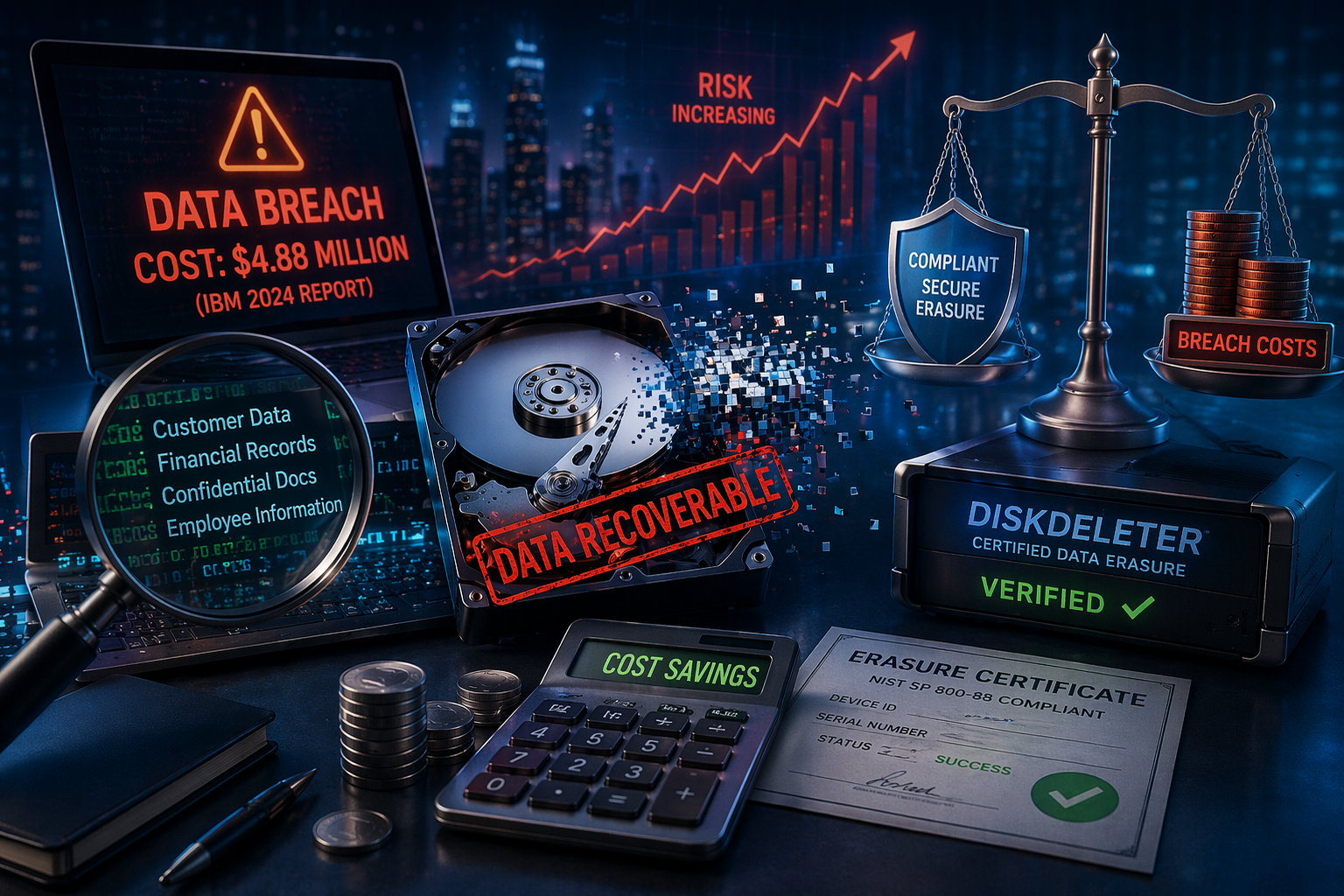
In today’s digital economy, data is one of the most valuable assets an organization owns — and at the same time, one of its biggest liabilities if not handled properly.
Every decommissioned laptop, replaced SSD, or retired server carries a hidden risk: residual data.
When Data Falls Into the Wrong Hands: Data Categories and Impacts if Leaked
Feb 24, 2026
Vivek Khanna
In today’s data-driven economy, information is no longer just an operational asset — it is a strategic currency. Organizations generate, store, and process enormous volumes of data across endpoints, servers, cloud environments, and backup infrastructures. Yet one overlooked vulnerability remains persistent: residual data left on retired or repurposed storage devices.
Mapping the Hidden Threats: Classifying Sensitive Data Within Storage Devices
Jan 23, 2026
DiskDeleter
Modern storage devices are no longer simple containers for files. They are multi-layered data environments that accumulate sensitive information across operating systems, applications, user behaviour, and system processes.
© 2026 Jungle KK - Powered By Knowledge Fortune